
Online Safety
Online Safety
Technology is a wonderful part of our children’s lives. It helps them learn, create and stay connected with friends and family. We want every child at Richard Coates to enjoy the opportunities the online world offers, while knowing how to keep themselves and others safe.
Online safety is part of how we keep children safe every day. It is taught explicitly, reinforced across the curriculum and shaped by our values. We want children to show kindness and respect online just as they do in school, and to know that they can always talk to a trusted adult if something worries them.
How we teach online safety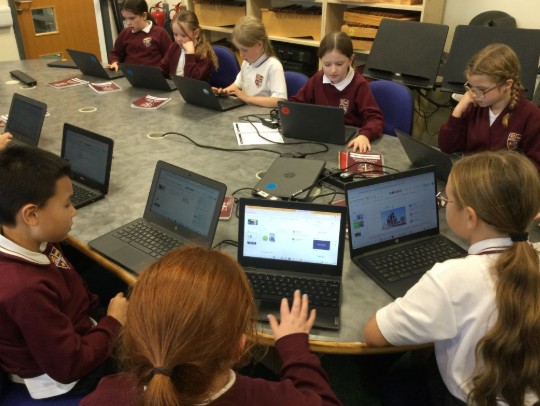
Children learn about online safety through our computing curriculum and our PSHE and Relationships Education, building their understanding year by year. Younger children learn simple rules about asking an adult before going online and telling someone if they see something upsetting. As they grow older, they learn about protecting personal information, recognising unkind or unsafe behaviour, judging whether information is reliable and understanding how technology, including artificial intelligence, can be misused.
Our long term plan for online safety plan can be viewed here.
Keeping children safe in school
Our school systems use filtering and monitoring to protect children from harmful content. These arrangements are reviewed every year by our leaders and governors to make sure they remain effective.
In line with government guidance, Richard Coates is a mobile phone-free school. Children do not have access to mobile phones at any point during the school day.
We understand that some older children need a phone for their journey to and from school. Pupils in Year 5 and Year 6 may bring a mobile phone if parents feel this is necessary for their safety, for example when walking home independently or meeting you at an agreed pick-up point. Phones must be switched off completely when children enter the school gates and handed in to their class teacher. They must remain switched off until children have left the school site at the end of the day.
This is about protecting the safety, wellbeing and privacy of our whole school community. Phones make it very easy to photograph or film other children and families without their permission, and we want our school site to remain a private and secure space for everyone.
If a phone is used on school grounds, it will be stored safely in the school office and can be collected by a parent or carer at the end of the day.
Artificial intelligence
AI tools such as chatbots and image generators are becoming part of everyday life, and many children come across them through apps, games and search engines. These tools can be useful, but they also bring new risks, including convincing fake images and conversations that can feel very real. We help children understand that not everything they see or hear online is true, and we encourage families to talk openly at home about the apps and tools their children use.
Working together with families
Children spend much of their time online at home, so working in partnership with parents and carers is vital. A few simple steps make a real difference.
Keep devices in shared family spaces rather than bedrooms, especially overnight. Check the age ratings of games, apps and social media, as most social media platforms are for users aged 13 and over. Set up parental controls on devices, broadband and consoles. Most importantly, talk with your child regularly about what they enjoy doing online, so that they feel comfortable coming to you if something goes wrong.
If you are worried
If you have a concern about your child’s safety online, please speak to our Designated Safeguarding Lead, Mr Watson, or one of our Deputy Designated Safeguarding Leads: Mrs Fargher, Miss Tweddle, Mrs Brogden or Miss Rutter.
If you are worried that a child is being contacted or groomed online, you can report this directly to CEOP, the National Crime Agency’s child protection command. If a child is in immediate danger, always call 999.
Our policy
Our Online Safety and Acceptable Use Policy sets out in full how we keep children, staff and families safe online.
Useful websites for families
Internet Matters: age by age advice and step by step guides to parental controls
NSPCC Online Safety: advice on talking to children about their online lives
CEOP Education: resources for parents and children, and the CEOP reporting button
Childnet: conversation starters and family agreement templates
UK Safer Internet Centre: information about Safer Internet Day and current online issues